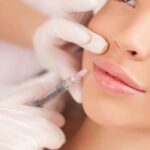
Nobody wakes up and decides they want to look like a statue. That era of aesthetics, where the goal was a face so frozen it couldn’t convey a hint of surprise, is mostly behind us. We are seeing a move toward something much more fluid. People want to look like themselves, just on a really good day after eight hours of sleep and a gallon of water. It is a shift from “fixing” to managing. We are analyzing the face as a moving, living thing rather than a canvas of static cracks that need filling.
The philosophy has changed. It used to be about erasing every trace of life from the forehead. Now, practitioners are looking at the way muscles interact. If you stop one muscle entirely, another one might overcompensate; leading to those strange, “Spock-like” eyebrows or a heavy, drooping lid. Modern care is about the balance between movement and stillness. It is about keeping the character of a smile while softening the depth of the lines it leaves behind.
The Logic of Preemptive Care
Waiting for a deep wrinkle to settle in permanently is becoming an old-fashioned strategy. Most people are now looking at “prejuvenation” as the standard. This isn’t about vanity in your early twenties; it is about the mechanics of the skin. Think of a piece of paper. If you fold it in the same place ten thousand times, that crease becomes a permanent break in the fiber. Skin works the same way. By the time a line is visible while your face is at rest, the “break” has already happened.
Modern care focuses on the behavior of the muscles before the skin loses its elastic memory. It is a lighter touch. Practitioners are using smaller amounts of product, often called “baby doses,” to simply take the edge off the contraction. You can still frown when you’re annoyed. You can still squint in the sun. The difference is that the skin isn’t being crushed with the same intensity every time you do.
Why Precise Distribution Matters in a Clinic Setting
When a professional looks at a face, they aren’t just seeing wrinkles. They are seeing a map of tension. Different areas of the face require different behaviors from the products being used. Some zones, like the forehead, are broad and need a treatment that can spread naturally to cover the muscle fibers without requiring dozens of needle pokes. Other spots, like the tiny area near the tear duct, require absolute stillness and zero migration.
Clinics often find that certain formulations are better suited for these wider “landscape” areas because of how the molecules interact with the tissue. A product that has a slightly higher rate of diffusion can be a massive asset for a practitioner trying to achieve a soft, airbrushed look across the brow. It allows for a more “global” relaxation of the area rather than a patchy or uneven result. For high-traffic medical environments, having access to these specific formulations in larger quantities is simply a matter of operational logic. It ensures that the right tool is always available for the specific anatomical needs of the patient, especially when the goal is a rapid onset of results that looks natural within days. This is why many practitioners choose to source Azzalure for clinics to keep up with the demand for these nuanced, high-diffusion treatments.
The Rise of Combination Strategies
We have moved away from the idea that one single injection can solve everything. The analysis now is multi-layered. You might have dynamic lines caused by muscle movement, but you also have skin texture issues and perhaps a bit of volume loss. Using a relaxant alone on a face that has lost its structural “bounce” can sometimes make the skin look even more tired.
- Muscle Relaxation: Softens the active pulling that creates the line in the first place.
- Skin Quality: Focuses on the surface, using things like polynucleotides or light peels to make the skin itself more resilient.
- Support: Using structural agents to lift the tissue so the muscle doesn’t have to work as hard to hold things up.
This “stacking” of treatments is where the best results live. It is about harmony. If the muscle is relaxed but the skin is paper-thin and dehydrated, the result looks unfinished. Professionals are now combining neurotoxins with deep hydration treatments to ensure the skin looks radiant, not just flat.
Navigating the “Frozen” Fear
The biggest hurdle in modern aesthetic care is still the fear of looking artificial. We have all seen the examples of “overdone” faces in the media. However, that look is usually the result of a lack of anatomical analysis. When a practitioner understands the “opposing” muscles; the ones that pull up versus the ones that pull down; they can create a tug-of-war that leaves the face looking lifted and open.
Accuracy is the enemy of the frozen look. By targeting only the specific fibers that cause the “angry” or “tired” expression, the rest of the face remains mobile. This is the difference between a mask and a refresh. It is a technical skill that involves knowing exactly where to place the product and how much it will spread once it is under the skin.

Common Areas of Focus:
- The Glabella: Those “11” lines between the brows that make you look like you’re squinting at a difficult email.
- Crow’s Feet: The lines at the corners of the eyes. The goal here is to soften them without losing the “twinkle” of a genuine laugh.
- Forehead Rhytids: Horizontal lines that appear when we are surprised. Modern care keeps some of this movement to avoid a heavy, “dropped” brow.
Sustainability of Results
How long these treatments last is always the burning question. On average, you are looking at three to four months, but that isn’t a hard rule. The more consistent the care, the more the muscles “learn” to stay in a relaxed state. It isn’t uncommon for long-term patients to find they need fewer units over time because the habit of frowning has been physically broken.
Lifestyle plays a huge role here. High-intensity athletes or people with very fast metabolisms often find that their bodies process these proteins more quickly. Sunlight, smoking, and even high stress can degrade the skin’s support structure, making the lines reappear faster. It is a partnership between the clinic and the patient’s daily habits.
The Future of Expression Management
We are moving toward even more personalized biological approaches. AI is starting to help practitioners map out muscle mass and contraction strength with incredible precision. This means the days of “standard” patterns are dying out. Your treatment will be as unique as your thumbprint because your facial expressions are your own.
The focus is firmly on longevity and health. We are no longer just chasing wrinkles; we are supporting the skin’s ability to move without breaking. It is a more intelligent, compassionate way to look at aging. It acknowledges that we are going to get older, but we don’t have to look exhausted while it happens.