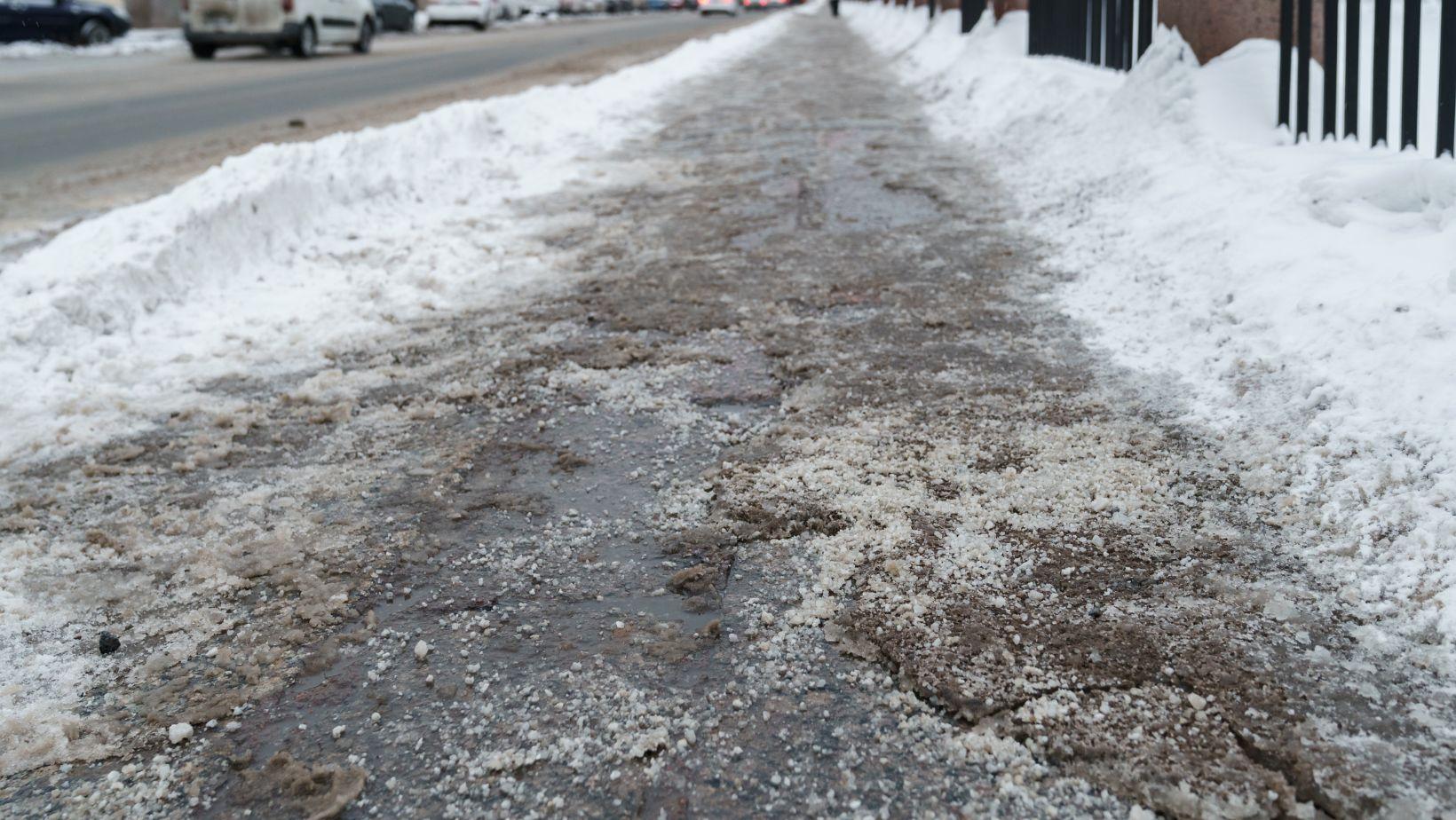
Anyone who has spent a winter in Bergen or Passaic County knows the routine. The first hard freeze shows up sometime in December, the plows start their rounds, and by the time the daffodils come back in April the parking lot at your favorite strip mall looks like it lost a fight. Potholes near the entrance, cracks running out in every direction, faded lines you can barely make out from the driver’s seat. Most people blame the snow, but the snow is really only part of it.
The bigger problem in this part of the state is the freeze and thaw cycle. Rather than the steady freeze New England receives, the temperature in North Jersey repeatedly climbs above freezing in the afternoon and drops back below overnight, all season long. Water seeps into small cracks in the asphalt during the warmer hours. Then it freezes after dark and expands. That expansion pries the crack open a little wider. The next thaw lets more water in, and the whole thing repeats. By March, a hairline crack you would not have noticed in October has turned into something you feel through the steering wheel.
Salt makes it worse, as do the plow blades that scrape across a commercial lot a dozen times over a bad winter, catching every raised edge and lifting loose material as they go. This is a slow and cumulative process, which is why so many property owners are caught off guard when spring arrives and their lot suddenly looks a decade older than it did in the fall.
A commonly overlooked aspect is that asphalt fails when water and sunlight break down the binder that holds it together. Once that binder dries out and oxidizes, the surface goes from black and flexible to gray and brittle. This allows water to seep in and freeze during the cold months.
This is where sealcoating earns its keep. A sealcoat is a protective layer applied over the existing asphalt that shields it from UV rays, water, oil, and the gas and chemical drips that show up in any parking lot. It does not fix structural damage that already happened, and no honest contractor will tell you it does, but applied on a reasonable schedule it slows the aging process down considerably and pushes off the day you have to pay for a full repaving job. For most commercial properties in this climate, that means a fresh coat every couple of years, with crack filling done before the seal goes down so you are not just sealing the damage in place.
Timing matters more than people think. Sealcoating needs dry weather and surface temperatures that stay warm enough for the material to cure, which in North Jersey realistically means late spring through early fall. If you try to squeeze it in too late into the season, you risk a coat that never fully sets, which is worse than not doing it at all. The smart move is to plan the work for summer, well ahead of the first freeze, so the surface goes into winter sealed and ready instead of raw and exposed.
If you own or manage property up here and you have been putting this off, the early part of the season is the time to get on a crew’s calendar before they book up. Local matters here, because a company that works this area year round understands what our specific weather does to pavement and will not try to sell you a Florida solution for a New Jersey problem.
A regional company like Appell Striping in North Jersey handles sealcoating, crack repair, and line striping across the area, and that combination is worth looking for, since a freshly sealed lot with crisp, clearly painted lines does more for how a property reads to customers than almost anything else you can do for the money.
A smooth, dark, well marked lot tells people a business is run by someone who pays attention, and a cracked, faded one tells them the opposite before they ever reach the door. In a state where the weather is actively working against your pavement six months out of the year, getting ahead of it is not an upgrade. It is just maintenance, the same as a roof or an HVAC system, and the owners who treat it that way are the ones not writing five figure repaving checks before they have to.
When the warm weather settles in for good, walk your lot, and look for cracks, the gray patches, and any areas where water pools after rainfall. Your pavement has been through a North Jersey winter, and it is telling you what it needs. The only question is whether you listen now or pay more to listen later.