There’s a special kind of chaos that happens when eight, ten, or even twelve people crowd around one table for a game night. Conversations overlap, snacks disappear mysteriously, and someone inevitably asks, “Are we sure this game can handle this many players?” The difference between a dull, dragging evening and a vibrant, memorable one often comes down to whether the game itself is built to handle a big, lively group.
In a world where people can always scroll through their phones or even click here for a quick digital thrill, convincing a large group to focus on cardboard and conversation might sound ambitious. Yet well-chosen party-style board games can do exactly that: they offer shared laughter, manageable rules, and a structure that gives every person a chance to get involved, no matter how many chairs you squeeze around the table.
Why Large Groups Are So Hard to Keep Engaged
The moment you cross into 8+ player territory, the entire social dynamic changes. In a small group, everyone can track each turn easily; in a large group, attention naturally fragments. Side conversations spring up. Some people lean in, others lean back. If the game isn’t designed for that environment, boredom creeps in quickly.
The main challenges are:
- Downtime: Long waits between turns make people check out mentally.
- Complexity: Rules that are perfectly fine for four players become overwhelming when explaining to ten.
- Spotlight pressure: Shy players may dread their turn if it means all eyes are suddenly on them.
- Table logistics: Tiny components and cramped boards simply don’t scale well when the table is full.
A great large-group game feels like it’s running on a smooth conveyor belt: everyone is doing something frequently enough that attention never fully drifts away.
Core Ingredients of a Great 8+ Player Game
When you strip away themes and artwork, the best big-group games share a handful of underlying design traits:
- Simple, teachable rules
If you can’t explain the game in five minutes and play a sample round, it’s probably not ideal for a crowd. Large groups magnify confusion. - Simultaneous or near-simultaneous play
Writing answers, selecting cards, voting, or choosing secretly at the same time keeps the whole table involved. - Short, punchy rounds
Quick rounds allow people to learn by doing, recover from mistakes fast, and re-engage even if they had a quiet moment. - Shared jokes or reveals
Games that build toward a reveal—funny drawings, surprising guesses, or unexpected votes—create “big moments” the entire group can enjoy together. - Elastic player count
Good large-group games handle fluctuating numbers gracefully. A couple of late arrivals shouldn’t require restarting or rewriting the rules.
With these ingredients in place, the game can withstand the noise and unpredictability of a crowded living room.
Game Archetypes That Shine With 8+ Players
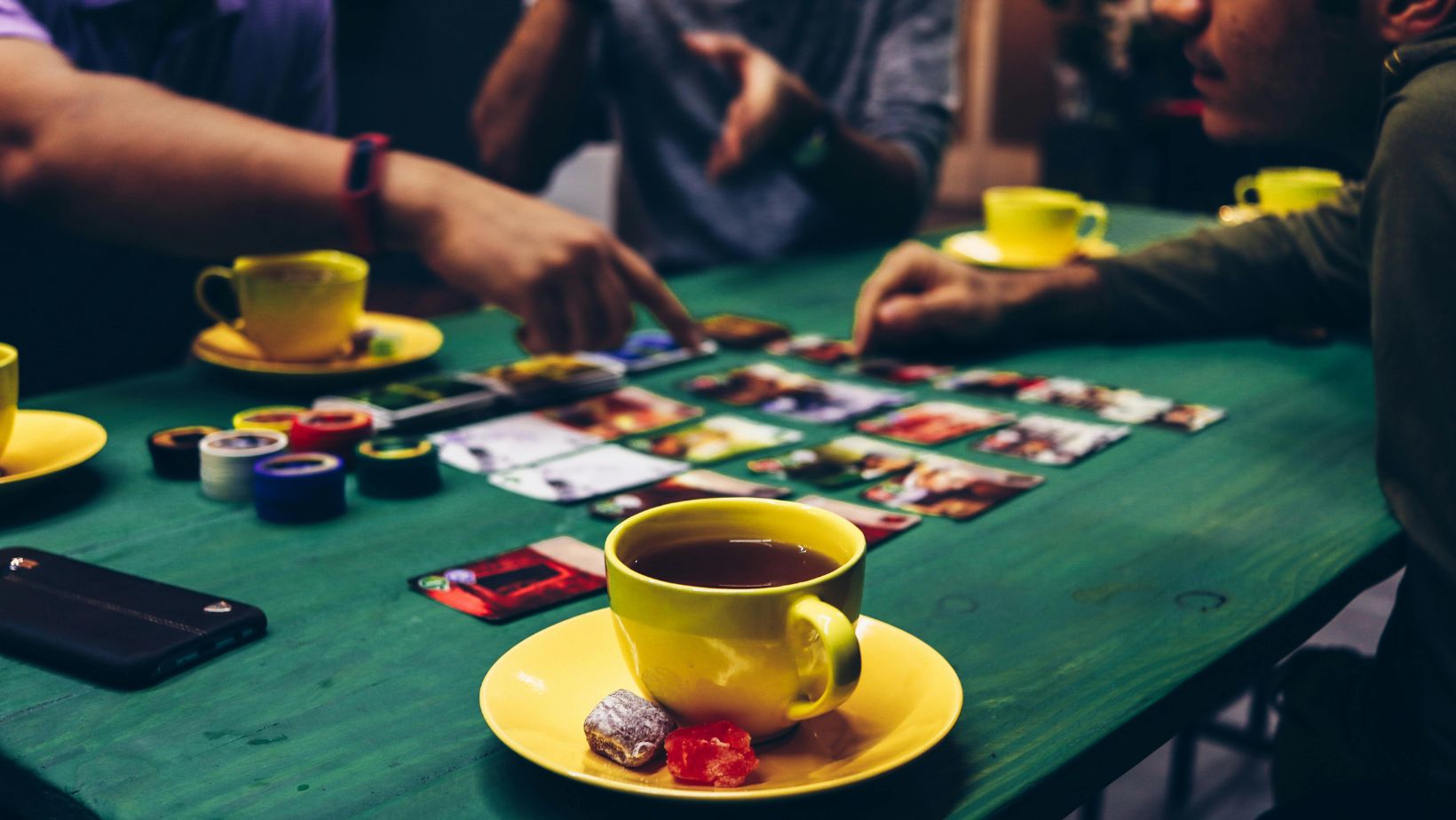
You don’t need specific titles to find something that works. Instead, look for certain types of games built to scale up.
Social deduction and hidden identity games
These revolve around bluffing, suspicion, and persuasion. Some players are secretly working against the group, and everyone is trying to figure out who is who. Large groups make these games more engaging: more suspects, richer accusations, and more chances for dramatic reveals.
Why they work for big tables:
- Many players can participate at once.
- The fun is in the conversation, not just the mechanics.
- Eliminations (if any) are offset by the entertainment of watching the drama unfold.
Simultaneous guessing and voting games
In these games, everyone writes, votes, or chooses at the same time—often trying to match the “average” opinion or predict how the group will respond. Results are revealed together, creating a wave of reactions around the table.
They scale well because:
- There’s almost no downtime.
- Shy players can participate quietly but still feel involved.
- The collective personality of the group becomes part of the entertainment.
Drawing and doodling games
Drawing-based games might sound intimidating, but the best ones actively reward clumsy, ridiculous art. With a big group, comparisons and misinterpretations multiply, and the room quickly fills with laughter.
Their strengths:
- Visual humor is instantly shareable.
- Skill level doesn’t really matter—often, worse drawings are funnier.
- The table naturally leans in to see what others have created.
Team-based clue or word games
These split players into teams, with each side trying to convey information under constraints: one-word clues, limited hints, or careful associations. Teams are especially valuable when you have many players.
Why they’re effective:
- People can whisper and collaborate in smaller clusters.
- Newcomers can participate lightly while more confident players lead.
- The “us versus them” structure gives the group an easy narrative.
Balancing Skill, Luck, and Laughter
With a large group, the emotional tone of the game matters as much as the mechanics. Games that rely heavily on pure skill can leave some players feeling outclassed, while games that lean entirely on luck can feel meaningless.
A satisfying balance typically includes:
- Meaningful choices: Players feel that their decisions matter at least a bit.
- Randomness or surprise: Outcomes stay unpredictable and light-hearted.
- Room for personality: Humor, creativity, or clever table talk can influence the experience without overshadowing the rules.
The goal isn’t perfect fairness; it’s an enjoyable mix of agency and chaos that lets different kinds of players shine in different moments.
Hosting Tips for One Table, Zero Boredom
Even the best-designed game can fall flat without a little intentional hosting. A few practical habits make a big difference:
- Pre-select 2–3 options
Don’t spend half an hour debating what to play. Offer a concise menu: “We can do a bluffing game, a drawing game, or a quick word game—what sounds fun?” - Explain with examples, not lectures
Show one short sample turn. People learn faster by seeing than by listening. - Use physical aids
Pens, scratch paper, reference cards, or a whiteboard help everyone follow along without constant questions. - Keep rounds short at first
End the first game a little early if attention starts to dip. It’s better to leave people wanting more than dragging out a lukewarm experience. - Rotate seating occasionally
For longer nights, changing who sits next to whom refreshes conversations and keeps social circles from ossifying.
Matching the Game to Your Group’s Personality
No single game style fits every group. Think about who’s actually coming over:
- Loud, expressive friends may adore bluffing, persuasion, and dramatic reveals.
- Mixed or more reserved groups might prefer guessing, drawing, or team play where no one is forced into the spotlight.
- Tired or distracted players benefit from very simple rules and high humor, rather than deep strategy.
Choosing games that align with the group’s energy and comfort level is more important than chasing whatever is currently popular.
The Hidden Value of Big-Group Play
Beyond filling an evening, large-group board games quietly strengthen social bonds. They help old friends see new sides of each other and give newcomers a gentle way into the circle. People share jokes, make small mistakes, and laugh together in a structured, forgiving environment.
When you find games that truly work for eight or more players, you’re not just avoiding boredom—you’re cultivating a recurring ritual, a reason for people to show up, put their phones down, and engage with each other face-to-face. One crowded table, a good game, and a lot of overlapping laughter can do more for a group of friends than a dozen half-forgotten nights out.