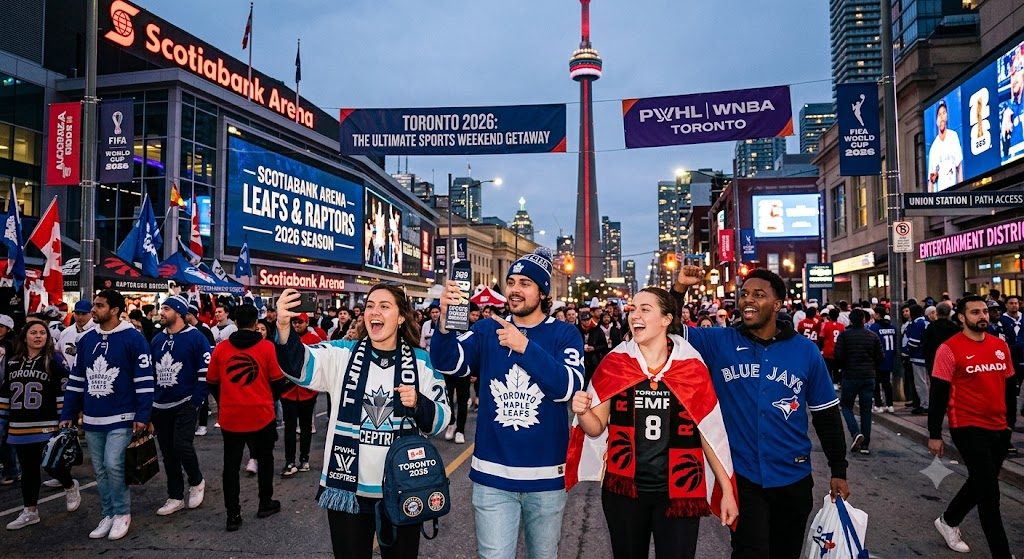
The Thirteen-Billion-Dollar Tourism Engine
The financial meat-grinder of modern sports waits for no one. Toronto has quietly mutated into a thirteen-billion-dollar sports tourism leviathan. Let’s be real; generic travel blogs miss the underlying mechanics here, opting for safe fluff over economic realities. Look at the raw data for a second. Over 28.2 million people flood into this exact geography every single year. Their collective wallets dump $9.1 billion in direct spending right into the local economy. That cash flow single-handedly props up almost 67,000 jobs in retail, hospitality, and heavy trades. You step off the plane into an ecosystem running on hyper-drive. This explains exactly why a standard weekend trip carries such palpable, electric friction. FIFA’s arrival alone pumped a projected $520 million straight into the regional GDP, permanently altering how the downtown core extracts wealth from visitors.
Bypassing the Tarmac and Hiding Underground
Aviation logistics actually make sense in this city. Global connectivity ensures fans from New Delhi can step off a 17-hour Air Canada flight—specifically AC43 operating a Boeing 787—and immediately hit the ground running. Nobody sits in highway traffic anymore. You jump on the UP Express, pay your $12.35, and twenty-eight minutes later you are standing inside Union Station. Urban transit actually got a massive technological facelift recently. The TTC finally ditched outdated fare cards for a fully open-loop contactless setup. Travelers just tap a physical Visa, Mastercard, or an Apple wallet upon boarding. A $3.30 fare triggers a two-hour transfer window. This “One Fare” initiative entirely eliminates double-charging when bouncing between local streetcars and GO Transit lines across the broader Hamilton area.
Winter weather used to ruin travel itineraries. Urban planners simply moved the sidewalks underground to solve this exact problem. The PATH network stretches thirty kilometers below the pavement. It acts as a climate-controlled bunker that links 75 commercial towers and massive transit hubs straight into major downtown hotels. Picture this scenario. A fan rolls out of bed, walks to the legendary Hot Stove Club for an absurdly good pre-game steak, catches four quarters of Raptors basketball, and heads back to their suite. Zero coats required; no slush ruining your shoes. Tourists wandering down there used to get lost constantly; it was practically a rite of passage. You would wander past endless coffee shops just trying to find daylight. Recent landmark-based updates to the color-coded cardinal directions (Red for South, Orange for West, Blue for North, Yellow for East) finally made the $1.7 billion retail network relatively idiot-proof.
Corporate Arms Races vs. Pavement Fervor
Corporate wallets drove a massive physical overhaul of the actual arena. Maple Leaf Sports & Entertainment poured $350 million into a brutal, rolling venue reimagination schedule. They essentially ripped out the old playbook to install Michelin-inspired Chef’s Tables in the 200-level Mastercard Lounge. Frictionless, AI-driven Amazon “Just Walk Out” concession stands replaced the old beer lines. PCL Construction managed to execute these structural shifts behind black curtains without ever relocating a single regular-season game.
The catch? Regular-season hockey access remains one of the most painfully expensive tickets in global sports. Lower-bowl seats casually command upwards of $450 to $800 on a Tuesday night. Even standing-room-only spots for high-profile matchups float around $270 on the primary market. Ontario’s Ticket Sales Act of 2017 actively penalizes predatory secondary platforms. SeatGeek famously ate a $25,000 fine for violating price caps a while back. Organic demand simply keeps prices astronomical regardless of government intervention.
Walk outside Gate 6, though, and the financial reality flips upside down. Basketball culture thrives on the freezing pavement of Jurassic Park. This space acts as a chaotic, massive outdoor tailgate zone for Raptors playoff games. Access costs absolutely nothing. Management runs a brutal digital lottery through their app between 9:00 a.m. and noon on game days. Winners score free passes, transforming Maple Leaf Square into a roaring sea of red and black without a dime changing hands. The stark contrast between corporate wealth inside the VIP suites and the blue-collar fervor outside is the defining cultural hallmark of Toronto sports.
Temporary Bleachers and Unprecedented Demand
Summer changes the entire geographic focus of the city. Soccer fans completely take over Exhibition Place down by the waterfront. The 2026 FIFA World Cup forced severe logistical gymnastics upon the city. A $146 million cash injection temporarily blew out BMO Field’s capacity to 45,736 seats. Broadcast networks demanded extreme structural modifications, and the city actually delivered. Six official matches hit this pristine natural grass pitch throughout the summer. Canada’s historic home-soil debut against Bosnia and Herzegovina packed the house instantly. Ticket scanners recorded an exact, verified attendance of 43,002 screaming fans. The subsequent influx of German and Portuguese supporters pushed the city’s local hospitality sector to its absolute breaking point.
Look closer and you will notice an equally massive structural shift happening in professional women’s athletics. Coca-Cola Coliseum is now the dual home for the PWHL’s Toronto Sceptres and the WNBA’s brand-new Toronto Tempo. Both franchises saw such ravenous, immediate ticket demand that earlier, smaller venues were instantly outgrown. Travel planners are furiously booking corporate group packages for these May and June games. This permanently altered the traditional summer downtime of the North American sports tourism calendar.
Smoked Brisket, Unfiltered Pilsner, and Hotel Room Tables
High-end gastronomy naturally chases corporate sports dollars. True fan culinary experiences require massive scale. Corporate proximity breeds monstrous hospitality concepts. Take Real Sports Bar & Grill for example. That place occupies 25,000 square feet of prime real estate literally attached to the stadium’s footprint. Their 39-foot main screen and 199 secondary HD displays provide an atmosphere mimicking the stadium’s intensity. Chefs back there pile twelve-hour smoked brisket onto nachos, completely destroying any preconceived notions of standard pub food.
Beer drinkers usually wander south toward the lake. Steam Whistle Brewing took over a massive 1929 train roundhouse a few decades ago; they exclusively churn out unfiltered pilsner. Half-hour guided walks through the machinery inevitably spill out into massive courtyard tailgates. You can literally stare at the side of the Rogers Centre while holding a fresh pint. A mandatory afternoon pilgrimage to the Hockey Hall of Fame breaks up the drinking. General admission costs $29.95 for adults, granting access to artifacts tucked inside Brookfield Place. You can physically step into the TSN Broadcast Zone to call play-by-play action before retreating back to your accommodation.
Sometimes, after surviving the PATH network, you just want to decompress in isolation. The provincial government anticipated this consumer habit by structuring a tightly monitored digital landscape. If you want to kill some time before your flight, Ontario’s online casino market offers a flawlessly safe ecosystem. DraftKings and other platforms operate under strict iGaming Ontario compliance. Geolocation locks ensure you are actually within provincial borders, cutting off anyone trying to spoof their IP address from outside the state lines. Live Dealer features stream human croupiers directly to your phone. You can literally play hands of blackjack from your king-sized bed while watching the sports highlights on mute. The sheer scale of this regulatory setup is wild. An 86.4% channelization rate successfully moved players out of offshore gray markets. The sector generated $82.7 billion in total wagers during its third year alone, proving that fans will happily spend money long after the stadium lights turn off.
The Displacement Trap
Macro-economic data eventually exposes the true friction of this tourism boom. Conventional logic suggests downtown hotels operate at 100% capacity during a World Cup or a deep Leafs playoff run. The reality is far more cynical; a massive “displacement effect” occurs behind the scenes. Affluent international tourists flood the luxury suites at heavily inflated Average Daily Rates. Regular corporate travelers actively avoid the city to escape the chaos. Overall occupancy actually plateaus around 72% to 82%, baffling casual observers. Destination Toronto uses sophisticated Event Impact Calculators just to balance this localized economic whiplash. Those pristine transit systems, digital kiosks, and premium stadium lounges do not exist by accident. The city engineered a perfect, frictionless financial trap for sports fans, and we are all more than happy to walk right into it.