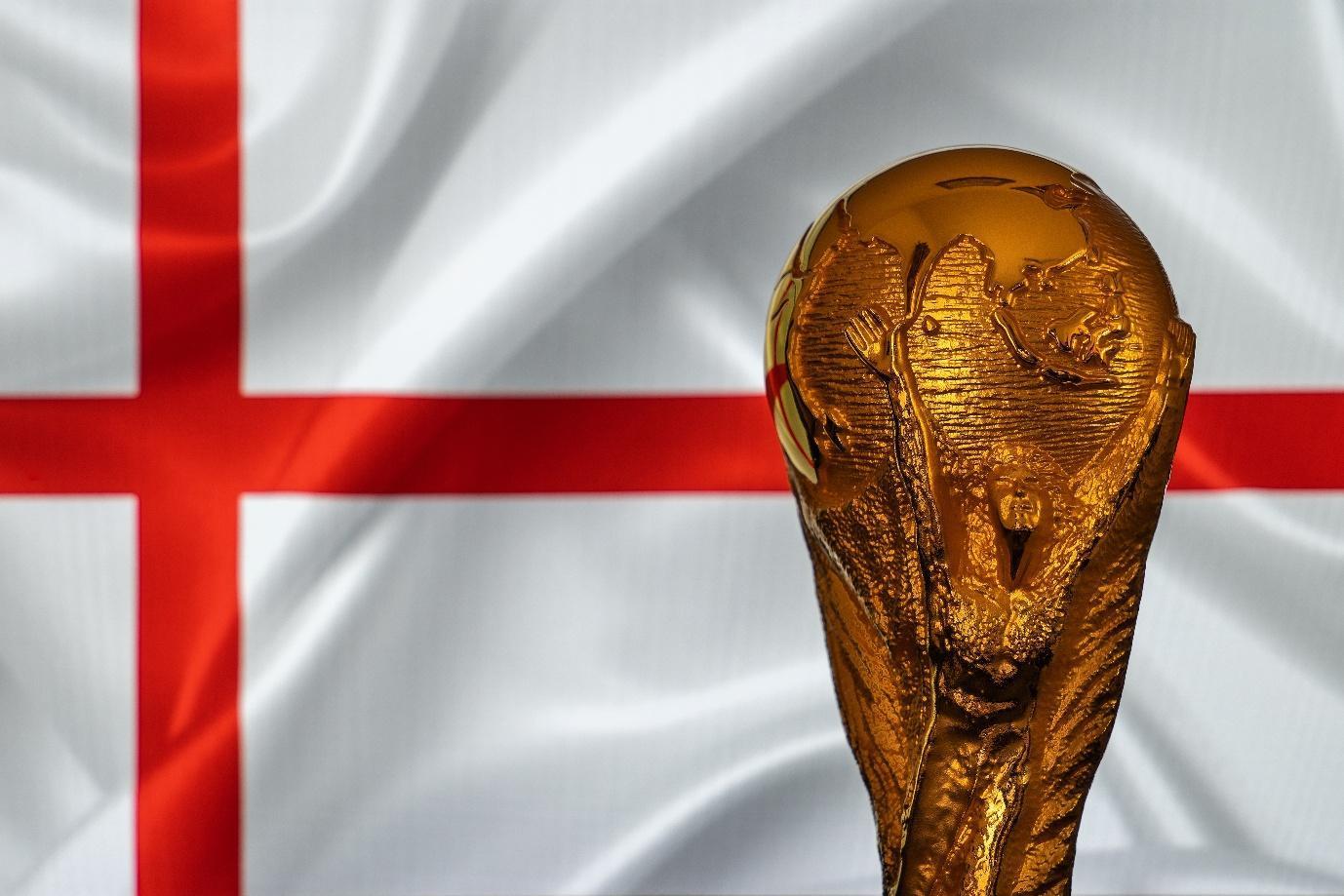
England face Norway in a World Cup quarter-final in Miami on Saturday 11 July. Interest in the Norway vs England odds will be high, but the two nations arrive at this fixture from genuinely different footballing cultures, not just different squads.
England: the game’s birthplace
England is where the modern rules of football were first written down. The Football Association was formed on 26 October 1863 at the Freemasons’ Tavern in London, making it the world’s oldest football association, and those original rules are still the basis for the game today.
Football in England runs on its fans as much as its players. When England beat Mexico in the small hours, more than 9.1 million people stayed up past 4am to watch it play out on BBC One and iPlayer. This loyalty runs through every corner of the culture, from sold-out stadiums to front rooms across the country, whatever the kickoff time.
National pride sits close to the surface too. Flags draped over shoulders, the three lions on every shirt, and the national anthem before kickoff all feed into a shared identity that English fans return to at every tournament.
Songs add another layer to England’s football culture. Sweet Caroline has been sung at the end of nearly every England game since Euro 2020, carrying through the 2022 World Cup and Euro 2024. This tournament, Wonderwall by Oasis has taken over as the song of choice. After the win over Mexico, players went over the advertising boards to sing along with fans, and Harry Kane lost his voice from joining in. Other songs like Vindaloo by Fat Les and Three Lions by Frank Skinner, David Baddiel and the Lightning Seeds have become an iconic part of English football folklore since the ‘90s.
The Premier League is the richest league in the world, pulling in top players and broadcast deals that no other domestic league can match. Away from the top flight, research from England’s football authorities puts the wider benefit of amateur football alone at more than £10 billion in social and economic value each year, supporting local businesses and jobs across the country.
Norway: a small nation with an oversized following
Football in Norway works on a much smaller scale. The Eliteserien, the country’s top flight, has a fraction of the profile and budget of England’s Premier League, yet Norway’s academies have improved enough in recent years to produce a golden generation built around Erling Haaland and Martin Odegaard from a population of only around 5.6 million.
Because the home league doesn’t carry much weight outside Norway, plenty of Norwegians support an English club as a second team alongside their local side. Sources have cited that over 90,000 Norwegians watch a football match when visiting Britain, with football being the sole purpose of their visit for many. Manchester United’s Norwegian supporters’ club alone has counted more than 40,000 members, a level of cross-border support few countries can match.
That same instinct for showing up in numbers extends to how Norway celebrates its own team. As Norway progressed through the knockout rounds at this World Cup, its fans turned a chant borrowed from Rosenborg’s home ground into the Viking row: sitting down together and miming rowing an oar to a rising drumbeat while chanting “RO”, Norwegian for row. Captain Martin Odegaard usually leads it on the pitch, taking charge of the drum. But this time around, after beating Brazil, Erling Haaland took charge, and celebrations for the team’s last-16 win, Norway’s best World Cup finish in almost three decades, were loud enough in Oslo and Bergen for seismologists to record the resulting ground tremors.
Both routines, the English singalong and the Norwegian row, will get one more chance to play out in Miami on Saturday, whichever side is doing the celebrating, while some fans follow it a different way entirely, backing and laying their view of the match on free bets as the picture changes before kick-off.