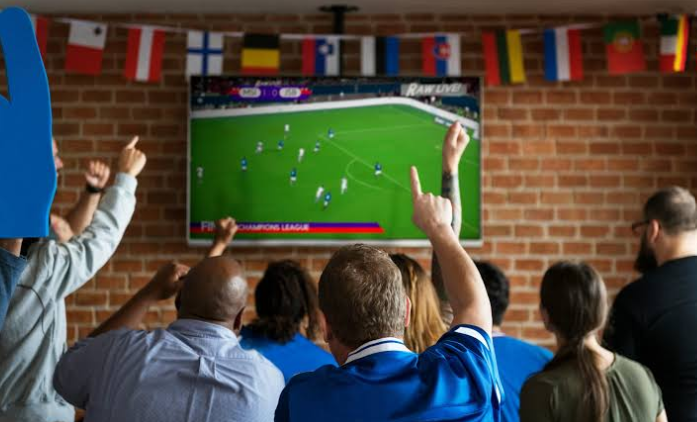
You’re watching a match, your team is scoring, and you open the app to check the replay and the stats. Then you close it and move on. The platform gets nothing – you came, you looked, you left.
That’s the real problem for most sports apps right now. It’s easy to show the game, but… Getting someone to come back tomorrow, next week, next season is a whole other thing. Most platforms still haven’t worked this out.
It Used to Be Simpler
In the past, when there were only three TV channels, fans either went to the stadium or watched the match at home on the TV. There weren’t many other options. Now, people have lots of sports apps, streaming services, fantasy leagues and betting accounts on their phones, all vying for people’s attention.
In 2024, the sports fan loyalty market was worth $6.4 billion. This isn’t because clubs started giving more money. They finally realised that if they don’t give people a reason to come back, they won’t. You can’t just advertise and expect people to start doing something. You have to build something that pulls them back on its own.
Most sports fans use a mobile app regularly. Approximately a third of them are on their phone while watching a live match. They are not doing it instead of watching the match, but at the same time as watching the match. The phone is already open. The question is just what you can see on the screen.
Gamification: Everyone Says It, Few Do It Right
Most sports apps claim to use gamification. In practice, this usually means a points counter that does nothing.
The NBA tried something different in 2024. During live matches, they put questions into the app as they happened – for example, “Will LeBron score in the next two minutes?” 65% of active users answered the survey. They weren’t just sitting around doing nothing. They were pressing buttons, making calls, and spending more time in the app. The NBA generated around $1.5 billion in revenue from League Pass, the app, and the online store in 2024. That whole revenue stream barely existed fifteen years ago.
The problem I keep seeing with most platforms is that the leaderboards are taken over by a small group of people who spend all day in the app. A regular fan who checks in a few times a week looks at a top-ten list dominated by people with thousands of points and gives up. The system is open to everyone, but in practice it just rewards the most dedicated players. That’s not loyalty; it’s just giving extra points to people who didn’t need convincing.
Personalization – Not Just a Buzzword
Manchester City’s app does one simple thing well: it shows different content to different people based on what they actually do. A fan who watches every women’s team match sees that content first. People who buy many products will see new products released. Most club apps still show every user the same content.
PwC data from 2025 makes this pretty clear: companies that do personalisation well grow the revenue they generate per customer 2.3 times faster than those that don’t. When a notification arrives at the right moment about something that actually matters to you, you open it. When it’s “check out our new article” for the fourth time in a week, I delete it.
In fact, betting platforms have actually got ahead of official club apps in this respect. It makes sense. If a user leaves, you lose money right away. This means that the pressure to get it right is real. Crypto-native sports platforms (i.e., platforms specifically for sports) have an advantage over traditional platforms because they can offer something traditional platforms cannot: transparency you can verify yourself.
Why Crypto Platforms Are Worth Watching Here
In the last 12 months, on-chain gambling platforms handled $40 billion in volume – a 411% jump from the year before. This stopped being a niche story a while ago.
When I look at how Dexsport approaches retention, there’s something different going on. Every bet is recorded on the blockchain. There’s a public live bet desk where you can see what’s happening right now – you don’t have to trust anyone’s word for it; you can check. For anyone who’s ever had a withdrawal stuck on a traditional platform or had a bet outcome disputed, that’s not a feature – that’s the whole trust conversation.
The loyalty structure is also built for the long run. You can get up to 10% cashback every week. This is on top of the money you get for winning. You get the cashback even if you lose. It’s just for being active. You can get monthly bonuses just for showing up regularly, not just for making one big deposit. The welcome offer – free bets on the first three deposits at 15%, 20%, then 25% – is designed to help new users in the early weeks, when most platforms lose users before anyone becomes a regular.
The new features, such as quests, achievements and customisable public profiles, are making Dexsport more like the best team apps, as they give people a reason to open the app even when there’s no match on.
What Doesn’t Work
Everyone got the same push notification at the same time. Loyalty programmes that reset to zero every January. Apps that are not as good as the website, and are made to fit on a smaller screen. Registration processes require ID verification before a person can place their first bet.
This usually happens quickly: if someone has a withdrawal problem, they will remember it. After just three irrelevant notifications, they all turn them off. If the app crashes during a live match, they’ll open something else. If you have too many of these bad experiences, all the goodwill you built up will be lost.
What Nobody Has Really Solved Yet
The Bundesliga launched an AR app with AWS – you point your phone at the pitch and see player speeds, passing maps, and expected goals overlaid on the live camera view. It averaged 180,000 active users per matchday in the 2023-24 season. That’s impressive, but it’s still a small fraction of the total Bundesliga audience.
The thing is, most fans aren’t power users. They check in once or twice a week, look at the result, and leave. Right now, it’s not really clear how to make those people feel that the platform is worth their time – not just the ones who are already spending three hours a day on it.
The platforms that figure this out first probably won’t be the most technically advanced ones. They’ll be the ones who realize that keeping a casual fan around matters more than adding another feature for people who were already fully hooked.